
We live in a world that praises hustle and rewards exhaustion. Productivity is worn like a badge of honor, and rest often feels like something we have to earn. In the middle of this constant striving, anxiety easily takes root—our minds racing ahead, our hearts weighed down by what’s next.
Yet Scripture tells a very different story. The Bible doesn’t treat rest as a luxury or an afterthought. It presents rest as a gift, an invitation, and a spiritual practice that anchors us when life feels overwhelming.
Anxiety: A Signal, Not a Shame
Anxiety is not a moral failure. It’s often a signal—our souls telling us we were never meant to carry everything alone. When worries pile up, it’s easy to believe that if we just tried harder or planned better, peace would follow. But the Bible consistently points us away from self-reliance and toward trust.
“Cast all your anxiety on Him because He cares for you” (1 Peter 5:7).
This verse doesn’t minimize anxiety; it acknowledges it—and then redirects it.
What Is Biblical Rest?
Biblical rest is more than sleep or time off. It’s a posture of the heart. It’s choosing to stop striving for control and instead settling into God’s presence.
From the very beginning, God modeled rest. After creation, He rested—not because He was tired, but to establish rhythm. Rest was woven into the design of humanity long before sin or stress entered the picture.
Later, Jesus echoed this invitation:
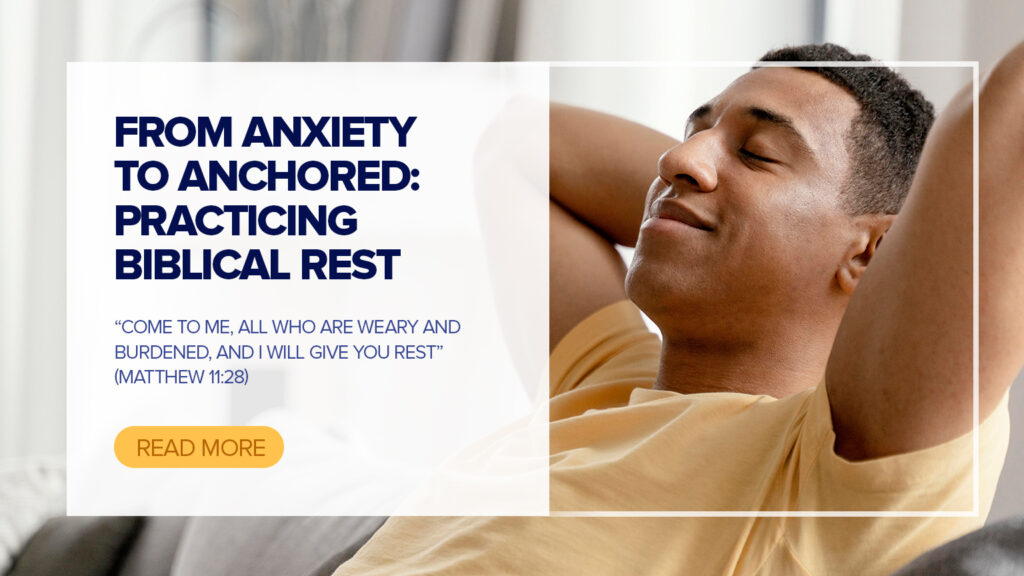
“Come to Me, all who are weary and burdened, and I will give you rest” (Matthew 11:28).
Notice that He doesn’t say, “Come to Me once you’ve fixed everything.” He says, come as you are.
From Restlessness to Being Anchored
Anxiety often makes us feel untethered—like we’re drifting, bracing for impact. Biblical rest does the opposite. It anchors us.
Hebrews 6:19 describes hope in God as “an anchor for the soul, firm and secure.” When we practice rest God’s way, we are reminded that our security isn’t found in outcomes, performance, or certainty—but in Him.
Being anchored doesn’t mean storms disappear. It means we’re held steady when they come.
Practicing Biblical Rest in Daily Life
Biblical rest is not passive; it’s practiced. Here are a few simple, faithful ways to begin:
- Sabbath as Trust
Taking intentional time to stop—whether a full day or a few protected hours—is an act of faith. It says, God, the world keeps spinning because of You, not me. - Prayerful Release
Instead of rehearsing worries, bring them to God honestly. Even short prayers like, “Lord, I give this to You,” can shift our focus from fear to trust. - Scripture as Stillness
Let God’s Word slow your thoughts. Verses like Psalm 46:10—“Be still, and know that I am God”—aren’t commands to empty our minds, but invitations to remember who’s in control. - Presence Over Productivity
Jesus was never in a hurry, yet He fulfilled His purpose perfectly. Practicing rest means valuing presence—with God and others—over constant output.
Rest as an Act of Worship
When we rest God’s way, we are worshiping. We are declaring that He is sufficient, faithful, and near. Anxiety tells us everything depends on us. Biblical rest gently but firmly tells us that it doesn’t.
Rest doesn’t mean life gets easier overnight. But it does mean we move from frantic to grounded, from anxious to anchored. And in a restless world, that kind of peace is a powerful testimony.